|
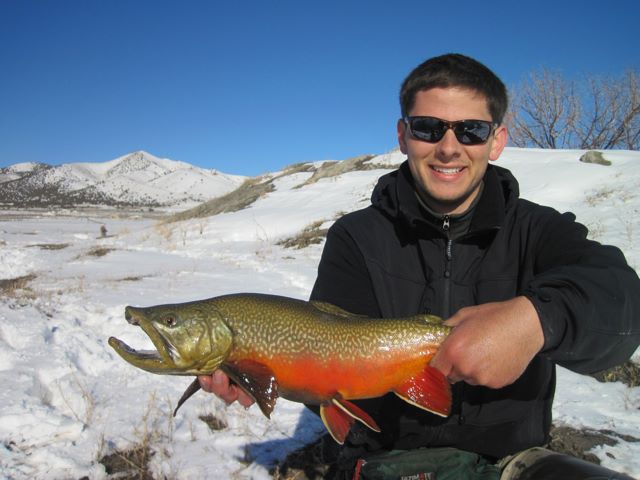
| Photo early spring buck tiger trout caught at dove creek west, hogan ranch utah, home to trophy trout school |
Fly Rods, Reels, Lines, Tippets, Leaders, Fly Patterns, Kit Bag, Knots, Fighting Techniques and More!
Master The Art Of Still Water Fly Fishing For Wild Trophy Trout ! HERE" For Complete DetailsFly Fishing Guides, Instructors & Trophy Trout Now Available In Utah, 45 Minutes From S.L.C. "Click
Fly Fishing Guide Service, Trophy Rainbow & Tiger Trout 45 Minutes From Salt Lake City, Provo, Orem & Utah County On Private Waters , Park City, Heber & Ogden Just A Little Bit Further For World Class Fly Fishing In Utah.
Now Available!Visit Our Website For Photo's & Complete Details:
http://sites.google.com/site/trophytroutschool/
Utah Fly fishing Guide Service Takes You To Monster Rainbows & Wild Aggresive Tiger Trout On A 10,000 Acre Ranch Just 45 Minutes From Salt Lake City & Utah County Park City, Heber Ogden Just A Little Bit Further to drive.
Best Year- Round Dry Fly Fishing In Utah For Lunker Trout!Dry Fly Fishing All Year Long. Our fishing guides & instructors show you the biggest trout on private waters. Artestian wells provide year round crystal clear water at 59 Degrees temperature, so we never freeze and we don't have to replace trout every Spring due to winter die off.
Private waters on 10,000 acre ranch near Salt Lake City, Park City, Heber City, Utah County, & Ogden. Dry Fly fishing at it's absolute finest. All trout over 3 lbs. and 20 " "+". Monster Rainbow & Tiger Trout Will Strip The Line Off Your Reel. See Our Website For Photo's & Complete Details About Fly Fishing With Guides On Our Private Waters.
How To Catch Lunker Trout in Utah: generally, fish usually grow to be bigger in lakes and ponds than in streams or rivers and live a very different lifestyle. This is also true with Rainbow and Tiger Trout.
Lets take a moment to review why this is so. In a river system, the food is generally moving past the trout. They take up feeding stations where they do not expend much energy fighting the current and move to capture their moving targets. These stations will also be close to areas where the flow of food is concentrated and/or easy to capture.
In still waters, it is generally the opposite: the trout are constantly cruising and the food is generally stationary or moving slowly. (An important exception to this rule is minnows and bait fish which are fast and elusive.) Adjusting your technique to address the environment of river or still water is one of the more important considerations you must make to look for those lunkers.
For now, lets concentrate on the still water techniques. So you must be prepared with a new set of fly fishing skills to be successful going after these prize fish that live in still waters. Especially if you want to take home the trophies (or at least get a picture taken with them before they are safely released)! Fenwick and I land the fish as quickly as possible, handle each one very carefully, take a quick picture then release as soon as possible to preserve the fish. We strongly suggest you do the same!
Secrets Of Catching Trophy Trout
"20+" trout are not uncommon in lakes and ponds provided the fish have lots of food and time to grow. If you know where to look for them and what to use to catch them your chances of catching your trophy are increased. However, they didn't get to be this big by not being elusive or smart! The truly elusive part is correct knowledge and techniques to properly catch them!
Fly Rods for still water: Depending on the species you are fishing for you will be best suited with a 5-7 weight soft to medium action. (Fenwick uses a 9' 5 Wt.) The soft to medium action is the most forgiving to cast while maintaining sensitivity to a fairly light strike, the type of strike consistently found by fly fishermen in still waters. For larger lake fish, I use a 9-wt. with a medium action. I like the flexibility this length and weight gives me to cast in to the wind and move my line in every direction while using any number of casting techniques. Whether I am on land or wading or on my float boat the 9-wt gives me plenty of power and line control as well as the ability to easily land the big ones up to 10 pounds or more in the lakes I fish.
All of my fly rods are 9 footers. I like the extra length for distance casting from a sitting position in my pontoon boat to a standing position either wading or standing on a bank trying to make a "difficult" cast close to overhanging tree branches or across a large weed bed. Again this long rod length is my personal preference and is also important since it will be used along with the reel to create additional controlled drag when the really big ones take off in a flat out run or swim into a swift current to aid in their escape. Yes, the rod can assist in drag if your fish is on the reel and your reel needs some help to control this big fellow (more on this technique under reels, coming up) and your free hand already is "palming" the spinning reel on full drag and your lunker is heading for weeds, down trees or even a current (if in a stream, river or lake inlet) to assist in his escape.
Casting On Still Waters: Unlike casting on rivers and streams with small light weight dry flies and nymphs, lakes and ponds require a whole new approach to the technique of casting. First, your fly can be bigger, weigh more due to the water it is holding. If you are using a bead head, cone head and sinkers located on a longer tippet for additional weight, the extra weight will also change your casting technique. You will not need many false casts to get near your target. No; you only need one or two casts and that is it. So you must be prepared to cast, immediately pick the fly up off the water the second it hits (before all that weight starts to drag it down), pump your rod back to the 1:00 o'clock position and at the exact moment of maximum back haul of the fly cast the rod forward to 10:00 0'clock and release your wrist (allow your wrist to bend forward in a "flicking" motion) as the line behind the fly starts to pull the excess line off the ground in front of your feet and point the rod tip to where you want the fly to land while the line quickly "shoots" through the eyelets and the fly lands on target on the second cast up to 50 feet or more! This is extreme casting on still water from the shore, or on a boat.
THE SHOOTING LINE CAST: Strip out additional line and pile it in front of you. Make a back cast and then as you reach the release point of your fore cast, release the line with your off hand and "Shoot" the line piled in front of you forward. This is very effective in adding distance to your cast. So, if you are false casting 20' of line in the air and have 10' of line piled in front of you, your final distance after shooting the line will be about 30'.
THE HAUL: Now, lets add a step to that. Begin again as above, but as you are casting forward, with your off hand jerk the line away from the rod and reel during the fore cast to add power to the cast and release. This will shoot the pile of extra line at your feet even further.
THE DOUBLE HAUL: Need even more distance? Then use the "Double Haul." Recall that a normal four step casting stoke will be a "back stroke...rest... fore stroke...release" action and the stopping points are approximately between 10:00 O'clock and 2:00 O'clock. During the fore stroke and back stroke, your off hand will make a "V" motion away from the rod and reel to add speed and momentum to the line. Let's break that down a bit: as your casting arm is going through the usual casting motion, your off hand is loading and releasing line to add momentum to the rod and line. So, assume a normal casting stance, pick your line off the water and start your back cast. During the back cast, add backward momentum and speed to your line by jerking the line with your off hand and releasing it as you back cast. Now, let the line straighten behind you. Now, begin your fore cast and again pull the line away from the rod and release as the line now straightens in front of you. This cast without an additional pile of line in front of you (we are going to add that next) is great for casting into the wind!
A note or two about learning these casts: Fenwick found an easy way to learn these casts. First, he practiced very slowly without a rod and reel until he understood the mechanics of the DH. Then on his lawn, he practised (very slowly at first) with no line on his rod, again till he got the feel and mechanics of the Shoot, Haul and DH. He then added line and continued practicing until his "muscle memory" built up and he could DH without really thinking about it.
Now to perfect our DH, we will combine the "shoot" (an additional pile of line at your feet) with the DH. Strip off additional line to your feet (you are going to shoot this line beyond your cast) Lower your rod tip and quickly start your back cast. Continue you back cast and "heave" the fly off the water and over your shoulder to the 1:00 o'clock position. As you are doing this "haul" the line with your off hand in a "V" motion away from your rod. Once your fly is fully extended behind you, move your rod forward, again adding the "V" motion haul, to the 10:00 o'clock position. Release the line at the exact moment of maximum force of the cast the forward. This is called "double hauling".
Photo Rainbow Trout Taken On Pond

Reeling In Lunkers
Reels: In addition to a long rod with a high weight I like a reel with a large arbor. A large arbor holds a lot of line and backing because big fish run and to fight them properly you need lots of line and backing. As long as you have a well lubricated reel with a good adjustable drag and plenty of line and backing you should be o.k. until the initial strike. Make sure the reel is matched to the rod weight and you are using the correct line for the rod and reel combo and plenty of extra backing. It is important, no - it is critical, that you use the reel to successfully fight and land the big fish.
Many fly-fisher persons leave a pile of line dangling in front of them while they fight the fish - with their fingers creating the drag. Fenwick and I are convinced this is a big mistake! Your lunker will be strong and fast. It can turn and blast away from you much faster than your fingers can react. Your reel is much more than a line storage device, it has a mechanical drag. So, always get the fish fighting the reel as quickly as possible and let the mechanical drag do its work and let the fish fight the rod and reel. You can then concentrate on reacting to the runs, turns and jumps of your lunker. If your reel cannot create adequate drag on the fish without breaking the tippet, get it fixed or buy a new one.
Proper Drag Settings: You will be using the drag combined with the rod angle to control a lunker on the run. You may even need your second hand to assist the drag by "palming" the reel to add more drag for the really big ones. You can't do this technique of "palming" if the fish is not on the reel. So practice getting every fish you hook on the reel as quickly as possible so you can learn the art of using the reel to retrieve the line, in addition to managing the rod, which when pointed at a specific angle to the running fish will also increase (90 degrees to a full 180 degrees) or decrease drag (below 90 degrees to pointing the tip even lower and straight at the running fish) when the reel drag is not enough or too much and you need to quickly ease up the pressure or risk breaking the line and losing your trophy.
Here is how to adjust your drag: Rig your outfit for fishing and grab the end fly of your tippet. Pull this line out gently and adjust your drag so that the reel gives line as you pull but is not set so light that it does not offer any resistance.
Bow To That Jumping Fish or Risk Losing It
"Bowing" to a jumping fish is also important when fighting the large trophy fish to relieve pressure on the line and to avoid breaking a tippet or bending a hook and letting the big one get away. Point the rod tip at the fish as it gets aerobatic, this allows the line to gently "glide" through the water and releases pressure off the tip and hook as the fish drags the hook line and sinker out of the water and up into the air. Many trophies are lost at this point due to inexperienced fishermen who have not successfully caught big angry airborne lunkers throwing their heads from side to side and thrashing the water surface and the air. These are the only techniques that will successfully land the big trophies time and time again.
Backing: Your reel must have a supply of backing line. This adds additional line for fighting the lunker, Cushions the fly line from being smashed against the arbor and adds diameter to the arbor so the line has larger loops when spooled. Make sure you have backing.
Floating or Intermediate Sinking Line ? Depth of fishing in still waters is critical because still waters tend to have "layers" of oxygen and temperature which hold fish at a specific depth. [Another critical difference between still water and river environments.]
Lines: Floating line is the fisherman's best friend. Generally, in still water you will only be fly fishing down to a maximum 20 Feet! Any deeper and you are below the depth that photosynthesis takes place and weed beds disappear, and so does the rest of the food most fish are feeding on.
You can also use sinking or intermediate sinking tip lines to reach depth. They can be quite useful for deep water fishing line and the second if you choose is the intermediate sinking line. Again, my personal preference is the floating line and compensating the "sink" using sinkers and bead heads on my flies.
Photo Trout Pond Fed By Spring In Utah

Tippet: Based on still water depth you will want the the tippet to be 25% longer than the depth of the water. Due to the slow sink rate combined with the uneven sinking of the line you need the extra length so your fly will get down to the bottom. Still water fish usually concentrate in the bottom 1-2 feet of the small lakes and ponds.
Photo Rainbow Trout From Lake Shore

Leader: I use a minimum 2 foot length of monofiliment leader connecting the tippet to the fly. Four pound is usually the lightest I will use. I like some extra strength in case my fish gets into the weeds and has to to be turned around to get landed.
Knot: Only one knot for non dry flies for me and that is the non slip polymer knot. This allows the fly to have more movement with an open loop going through the eye and as the name implies the loop will not "slip" or close on the eye when the fish is hooked and being reeled in. So on the next cast the fly will continue to move freely up and down with the open loop through the eye.
Photo Tiger Trout Taken
From Moss Bed Near Lake Shore

Kit Bag: Especially when you are floating around in your pontoon boat you will want some supplies that are easy to reach and kept water proof. So make sure the bag is water proof. The bag of goodies is also helpful if you are far away from your car or truck and don't want to walk back and forth for a minor item like leader or a specific fly that seems to be the only one working and you just broke it off. So I always carry a pack containing the following items:
Cell Phone sealed in plastic resealable baggie (there may not be phone service, but I will always have a camera ready for a good photo). The cell may come in handy if I have to land on a distant part of the lake and wait out a storm to return. I can call and let loved ones know that I am o.k. . Needless to say emergencies can be covered too, even if you have to travel by land or boat for a few miles to located a signal. I always have a cell phone just in case. For bigger lakes where no cell service is available a waterproof two way radio with multiple channels is a must. In an emergency you can usually get in touch with the lodge or another boater.
Polarized Sun Glasses: Protects the eyes from the sun and bugs plus you can see cruising fish.
Sun Block is essential to protect from severe sun burn on the face, arms and ears. The sun is especially brutal at high altitudes and the rays are amplified as they reflect off of the water and on to unprotected and exposed skin. Be sure to place your sun block on before going into the water. This way you can wash the lotions off of your palms and rub some mud on them to mask the chemical smell so it will not transfer to your flies or line from your hands.
Aquarium Net: Sampling what is living in the water as you float around is really easy with this little tool. You can quickly spot emerging flies and get them in hand to quickly identify what patterns you have on hand to "match" them. The handle of the aquarium net comes in handy for reaching out from the edge of a stream or lake bank to "snag" a swimming insect for closer inspection.
Long Handled Landing Net: From a float boat as well as a the shore of a pond or lake I like the easy access to my fish by using a long handled net. I usually fish with a friend so we will net each others catch to keep the stress on the fish to a minimum while it is out of the water and also to quickly and safely return it. The long handle is perfect for this technique. Remember to use fish friendly mesh that will not snag the fins or remove scales. I use a rubber mesh that is fairly wide and makes a nice bed for the fish to lay in while the hook is removed and then as it is returned to the water and released. I also dip the dry net into water before netting and landing the fish so the rubber mesh will not be abrasive to the scales or slime.
Stomach Pump: Remember this is even better than the aquarium net when you catch a fish to see what is on the main menu. Now you will know what they are feasting on without the guess work. The bulb of the pump is filled with water and the tip is then gently inserted inside the fishes throat just past the flap closure (esophagus for the technical types) and then you gently press the bulb to flush the area with water and release the bulb when it is empty to quickly suck up and collect the throat contents. You really don't go into the stomach, any food located that deep will be too digested to help you out. Plus you could injure the fish. Remove the pump, release the fish.
Plastic Resealable Baggie: I use a 1 gallon baggie to empty the stomach pump contents into to see what is swimming around. Once the contents are in the bag I know exactly what the fish is feeding on and it is easy to empty the baggie into the lake and reuse on the next fish. Binoculars: Wonder what the other guys are using to catch fish ? Take a look around. You can also see if there are active fish on another part of the lake and you can move to the active area. Thermometer: No fish finder to tell you water temperature ? Drop a thermometer into the water on a slim rope and find out. Look for the proper temperatures for the species you are after.
Hand Towel: After releasing a few fish and washing your hands you may begin to notice the affects of the cold water. Use a towel to dry off and your hands won't get cold. Tippets: Several precut to length tippets or a spool of tippet material needs to be handy so you can easily select a replacement for one that is broken or tattered. Split Shot: Varying sizes, I like reusable with a tail on them stored in a small plastic cylander with multiple compartments that is easy to access no matter where I am on a boat or shore and need to add some weight. Strike Indicators: Assorted colors and sizes so you can easily adjust to the water conditions, wind, waves and weight from large flies all combined and dragging the strike indicator so it does not interfere with the fly.
Leader: I recommend a couple of fresh spools of several different sizes and colors (for leader shy fish and differing light conditions) so you can easily change out line that has nicks and scratches from being pulled through grass, weed beds, and over rocks sticks and trees. Not to mention hooked fish that have left some teeth marks as well.
Flies: Scuds, Chironomids And Leeches
Scuds run in hook size from a number 6-16. On lakes the average is about a 12. Colors range from black, olive, brown, pink to orange (dead scuds colors). Some have bead heads some do not. Body's include "dubbing" of natural hair to man made materials. Some have plastic shells made from baggies or Saran wrap accentuated with copper, gold, silver wire or dark thread wrapped around the body to simulate body segments. Whichever Scuds you select, remember they live their entire life on the bottom, they move slow and they are the number one food that fish depend on for their basic diet in every natural still water trout situation.
Chironomids have three stages of life. The fertilized egg is too small for us to worry about but it soon hatches into the the blood worm (so called for the red color, this is not to be confused with a leech) or larvae and will remain in this state for up to 3 years depending on the climate. Warmer climates 1 1/2 to 2 years. High altitude and cold climates 2 1/2 - 3 years before maturing to the next stage of life. The larvae is the first stage we imitate for fly fishing. Blood worms (red color), San Juan worms are just the ticket for still water fish. There are literally millions of them in every lake and pond in the United States. They range in color from red to brown to black and they are another primary food source for fresh water fish. Estimates range in the 7-10,000 chironomids per square meter in still lake bottoms. That is one hefty population of food that is available year round, just like the Scud. They build small tubes that extend up from the lake bottom and they only come out to feed or move as a pupa to the surface. However, storms and waves can break these fragile mud homes and release the tasty meal into the realms of the crusing trout in the area. So wind and waves can be a still water fishermans friend. Find the chironomid beds and you will find the trophy trout. Tip: The beds are built on firm mud bottoms, not soft sediment. So if you use a fish finder, watch the bottom line indicator and look for the solid bottom verses the soft mucky material.
Tie Some Patterns
Tying materials for artifical worms ranges from chenille to flat thin plastic thread and colors vary from differing shades of green to black and red. Sizes from 6-16 with 12 as a good lake average. The third stage of life for the Chironomid is the pupa and the body is much bigger around than the thin worm since the fly almost fully developed and is ready to open the shell and fly away once it reaches the surface of the water.. The pupa is an emerger pattern and is fished just below the surface of the water in the meniscus. A good emerger pattern offers a body, gills and a small head.
The leech makes up the third main food source in the still water buffet. Leeches are tied using marabou (soft under wing bird feathers) and rabbit fur (natural or dyed cut in long strips sometimes called "zonkers"). Marabou and rabbit hair "undulate" and almost dance in the water creating a swimming motion that appears to be alive. I love these two materials for the affects they create to the appearance of the flies they imitate. Another material is mohair. It makes a really skinny leech body that is quite fuzzy when dubbed on the line. Fish seem to really like a super skinny mohair leech with a flared marabou tail. Colors follow the range of the rainbow. Some imitations have bead heads and some do not. So you have a lot or range with water conditions and how you want the leech to handle in these varying conditions. Leeches live in the bottom mud in slow moving water usually hidden under leaves, rocks or other bottom debris until they need to feed. That is when they venture out in to the open water where they become succeptible to attack from a large hungry trout. The leeches are larger than many aquatic insects and make a larger acoustic footprint as they swim through the water and is easily identified by the lateral recognition in fish (except for the skinny mohair model). I like a 6-12 with the average 8 size. I also like a gold cone head to take the big fly down a little quicker and allow it to dive back down when I jerk the rod tip in an upward direction and then drop the rod back down again. This up and down jigging seems to be a great swimming pattern that fish like in almost every lake I have fished in. So I keep it up. The mohair has no cone head or bead head so I use a sinker about 6 inches above the head on the leader. This will give the fly the same diving affect as the cone head, but the sinker takes all the abuse of the bottom rocks and sticks while the leech rides slightly above the bottom. Bead heads and cone heads on the other hand will crash into the bottom and take the abuse of the bottom rubble. Both techniques work well but be sure to check the bead head and cone head more often for cuts and abrasions on the line as well as wear and tear on the knot itself. Retie often, there is no sense in losing a good fish to a poor knot or a worn line.
Still Water Fly Fishing Techniques And Secrets
Naked floating line, with no strike indicator and basically drifted behind the float boat with the current. Keep the rod tip near the water and set the hook with a parallel action across the water, not up in the air. Lifting the rod up to set the hook will only lift the line off the water surface and your fish will get away. Pulling the rod parallel along the surface of the water maintains tension "tight lines" (oh, yeah that is what you want) between the rod tip and the fly so when the fish strikes you get a solid set hook and not a miss. Patience is key since a fly may take 20-30 seconds to descend into the strike zone and the retrieve must be very slow so you don't pull the fly out of the feeding column.
FINAL NOTES: When on still water, remember the rule: SLOW, SLOW , SLOW. Scuds and much of the food the trout are crusing for are very, very slow. And remember the exception to this rule: when using streamers or nymphs such as damselfly nymphs, they are capable of short bursts of speed so mimic that action with jerks of the line from a few inches to 2-3' at a time to duplicate the evasive action of these baits.
If you want to catch lunkers, try to find some lunkers to practice on. Fenwick and I have a blast flyfishing for carp. These strong fish test both our skill and equiment to the max and most importantly give us easy practice hooking and landing large fish. We both feel confident that our once in a lifetime trophy can be brought to net as we have already landed 8, 10, and 12 lb. carp and we are just waiting for a trophy trout of that size.
Good luck and tight lines to you.
Let us know if you have any questions or comments.
All Tied Up
and
Fenwick Fleigenbinder
www.trophytroutschool.com